

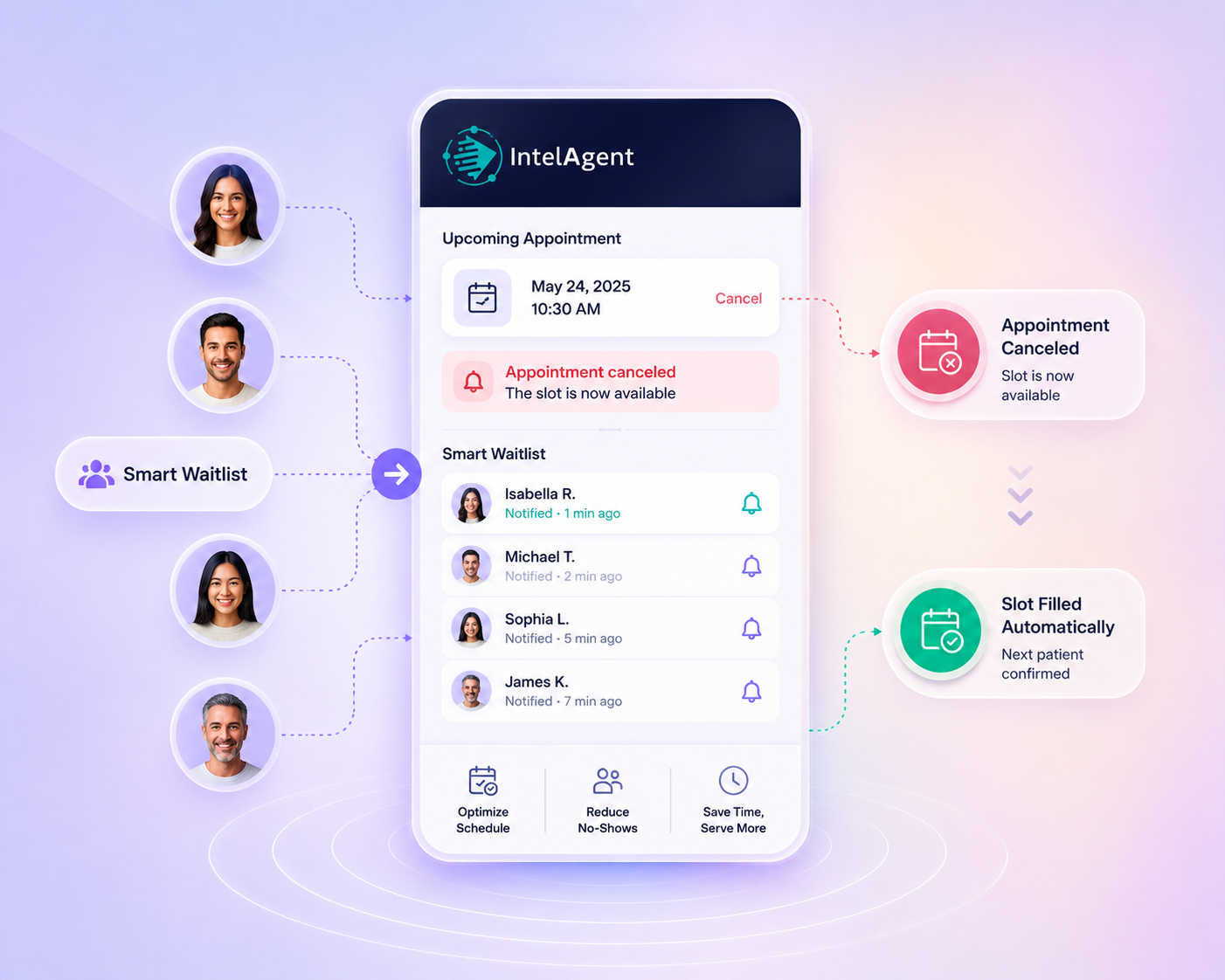
At a clinic, a last-minute cancellation often triggers an inefficient workflow: the front desk checks manual lists, calls patients one by one, leaves voicemails, waits for responses, and by the time someone finally answers, the appointment slot is often already lost. This model not only consumes administrative time but also leaves revenue on the table and reduces the practice’s productivity. Smart waiting lists—also known as ASAP lists or cancellation lists—were created precisely to solve this problem. Unlike traditional waiting lists, which simply accumulate patients waiting weeks for their first appointment, the ASAP list is designed to act quickly. Patients who already have an appointment agree to receive an offer if a slot opens up earlier, and the system automatically notifies them when that slot becomes available. The first patient to confirm takes the appointment, and the rest are notified that the slot has already been filled. The logic seems simple, but its impact is significant, because in healthcare, every minute counts. The research you shared shows that notifying patients within the first 5 minutes after a cancellation can triple the fill rate compared to waiting 30 minutes, and that automated systems can recover up to 70% of canceled slots in less than 2 hours, while the manual method barely reaches 25% to 30%. In addition, a study by Health Services Insights on an automated waitlist process found that more than one million appointment offers were generated in a year, with patients rescheduling their visits an average of 22.6 days later, thereby improving access and efficiency. Another study published in JMIR showed that an automated rescheduling system reduced no-shows by 38% among those who accepted an early appointment offer, with even better results when the offer was sent via SMS. This confirms that a cancellation doesn’t have to be a permanent loss: it can become an opportunity for another patient who needed care sooner. For a plastic surgery clinic, this means protecting revenue, optimizing the surgeon’s schedule, and improving the patient experience, because patients who secure an appointment sooner tend to be more consistent and less likely to miss their appointments. Integrated with Intel Agent, this system can react in real time to the doctor’s schedule, send automatic reminders, and fill gaps seamlessly, turning every cancellation into a recovered appointment.
Smart Waitlists: How a Cancellation No Longer Means a Lost Slot
When a patient cancels, the real problem isn’t just the empty slot—it’s the lost time, the lost revenue, and the missed clinical opportunity. Smart waitlists turn that gap into a new appointment by automatically contacting patients who have previously indicated they’d like a slot if one became available. Evidence shows that an automated process can generate hundreds of thousands of new appointment offers, move patients to earlier dates, and reduce wait times by full days.
Keep reading
June 27, 2026 · NEOERA Team
The Hidden Cost of Not Responding in a Timely Manner: What the Data Says About 24/7 Care in Plastic Surgery
Every call or message that isn’t answered in a timely manner costs a plastic surgery practice real money: up to $2,000+ in expected value per missed call, and conversion rates that drop by up to 80% if the call isn’t answered within 15 minutes. Patients do their research at night, wait just 90 seconds before hanging up, and nearly a third never call back. Intel Agent solves this by answering and scheduling appointments 24/7, capturing that critical window of minutes when most conversions are decided.
June 26, 2026 · NEOERA Team
The waiting room should no longer be a physical space: what the data says about digital check-in and the perception of wait times
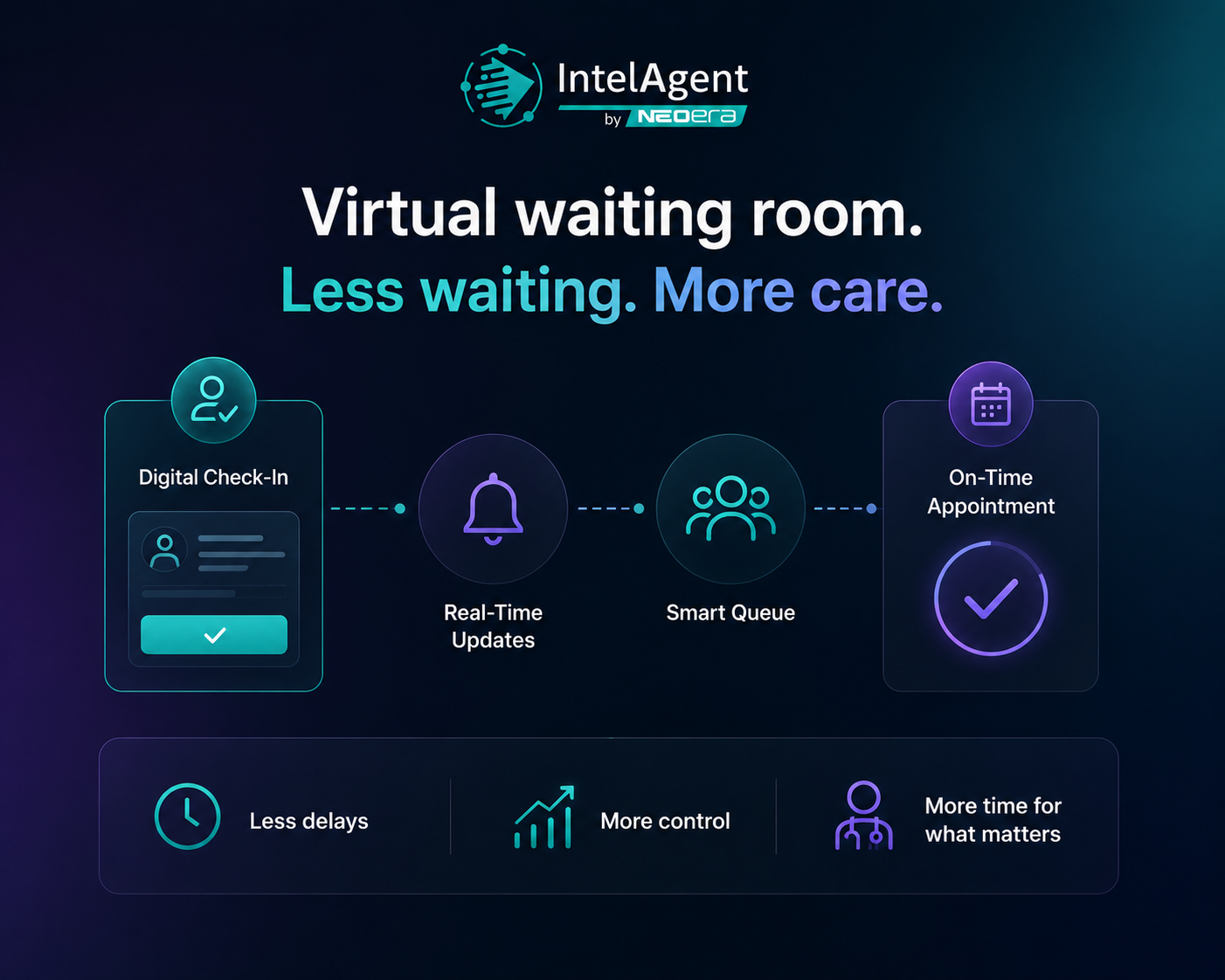
Patient satisfaction depends more on the perceived wait time than on the actual wait time, and a lack of information about how long the wait will be measurably reduces satisfaction. Digital check-in in healthcare has shown reductions of up to 40% in wait times, improvements in satisfaction from 3.4 to 4.7 out of 5, and up to 50% fewer registration errors. Eighty percent of patients would switch providers solely for convenience, regardless of the quality of care. IntelAgent extends this digital check-in approach to the entire patient journey—from appointment confirmation to arrival at the office—reducing friction and building trust from the very first point of contact.