

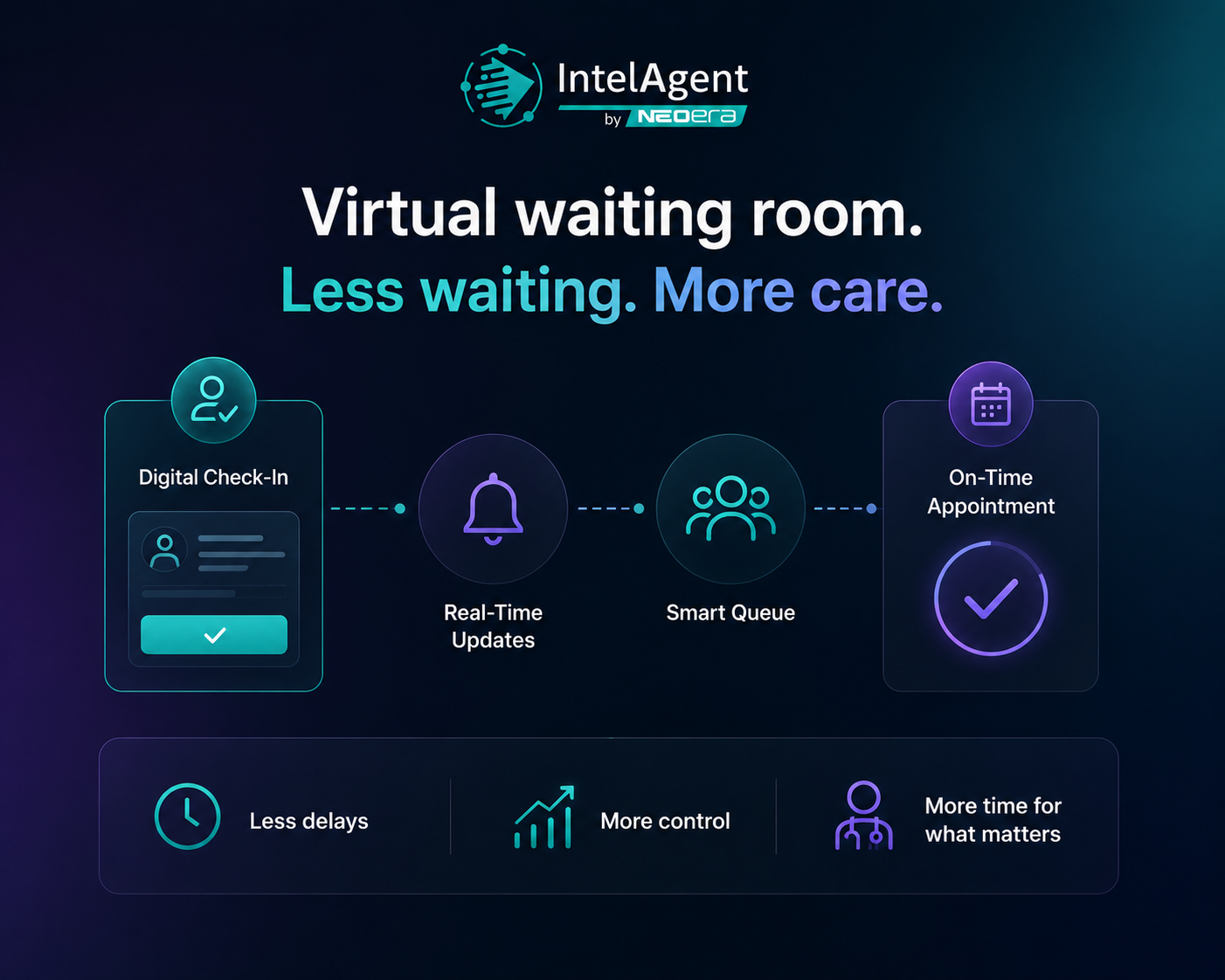
Few experiences undermine the perception of a medical practice as much as a crowded waiting room where patients are left in the dark—not knowing how much longer they must wait or whether anyone has even noticed their arrival. And the most revealing finding from research on patient satisfaction isn’t the actual wait time, but something more subtle: what most influences satisfaction isn’t how long patients objectively wait, but how long they believe they’ve been waiting—and whether they were informed about it. A study on satisfaction in emergency departments found that patients who were informed of their wait time reported significantly higher satisfaction than those who were not given that information, even when the actual wait time was similar. This explains why the anxiety of “not knowing” weighs just as heavily as the wait itself, and why the solution isn’t just to reduce the time spent in the waiting room, but to eliminate uncertainty from the very first point of contact. This is where digital check-in has shown measurable results in other healthcare settings. Studies on kiosks and digital check-in systems report reductions of up to 40% in total wait time at medical offices, with the registration process dropping from 8–12 minutes at a traditional front desk to just 1–2 minutes digitally. Patient satisfaction, as measured in these studies, rose from an average of 3.4 out of 5 with the traditional process to 4.7 out of 5 with the digital process. Furthermore, digitizing the registration process reduced data entry errors by more than 50%, simply because patients enter their own information rather than having someone transcribe it by hand under time pressure. Patients’ preference for these processes is no longer marginal: in recent surveys, more than half of the patients who tried digital check-in preferred it over paper forms, and a widely cited study in the industry found that 80% of patients would be willing to switch healthcare providers solely for convenience, without questioning the quality of medical care. In other words: a poor check-in process can cost a surgeon a patient even when their surgical work is excellent. For a plastic surgery practice, where each consultation represents a decision of high emotional and financial significance for the patient, this friction carries additional weight. Arriving for an appointment to find a crowded waiting room, without knowing whether the system has actually registered their appointment, or having to repeat information they’ve already provided over the phone, undermines the very trust the surgeon needs to build from the very first minute. And from an operational standpoint, every minute of confusion at the front desk is time that staff spends resolving administrative issues instead of preparing the patient for the consultation. IntelAgent extends this digital check-in logic to the entire patient journey, not just upon arrival at the office. From the moment an appointment is scheduled, the patient receives confirmation, reminders, and the information needed to prepare in advance; upon arrival, they can check in digitally, without having to rely on someone at the front desk being available at that exact moment or filling out repetitive paper forms. The surgeon, for their part, can see in real time who has confirmed their arrival and what information has already been recorded from the initial conversation with the agent, eliminating data duplication and reducing the friction that typically occurs between the waiting room and the exam room. The result is an arrival experience that feels organized and professional from the very first physical contact with the clinic—precisely the moment when, according to data, a significant portion of the patient’s trust is either solidified or lost.
The waiting room should no longer be a physical space: what the data says about digital check-in and the perception of wait times
Patient satisfaction depends more on the perceived wait time than on the actual wait time, and a lack of information about how long the wait will be measurably reduces satisfaction. Digital check-in in healthcare has shown reductions of up to 40% in wait times, improvements in satisfaction from 3.4 to 4.7 out of 5, and up to 50% fewer registration errors. Eighty percent of patients would switch providers solely for convenience, regardless of the quality of care. IntelAgent extends this digital check-in approach to the entire patient journey—from appointment confirmation to arrival at the office—reducing friction and building trust from the very first point of contact.
Keep reading

June 27, 2026 · NEOERA Team
The Hidden Cost of Not Responding in a Timely Manner: What the Data Says About 24/7 Care in Plastic Surgery
Every call or message that isn’t answered in a timely manner costs a plastic surgery practice real money: up to $2,000+ in expected value per missed call, and conversion rates that drop by up to 80% if the call isn’t answered within 15 minutes. Patients do their research at night, wait just 90 seconds before hanging up, and nearly a third never call back. Intel Agent solves this by answering and scheduling appointments 24/7, capturing that critical window of minutes when most conversions are decided.
June 26, 2026 · NEOERA Team
Personal Data Security and Regulatory Compliance in AI-Powered Patient Communication
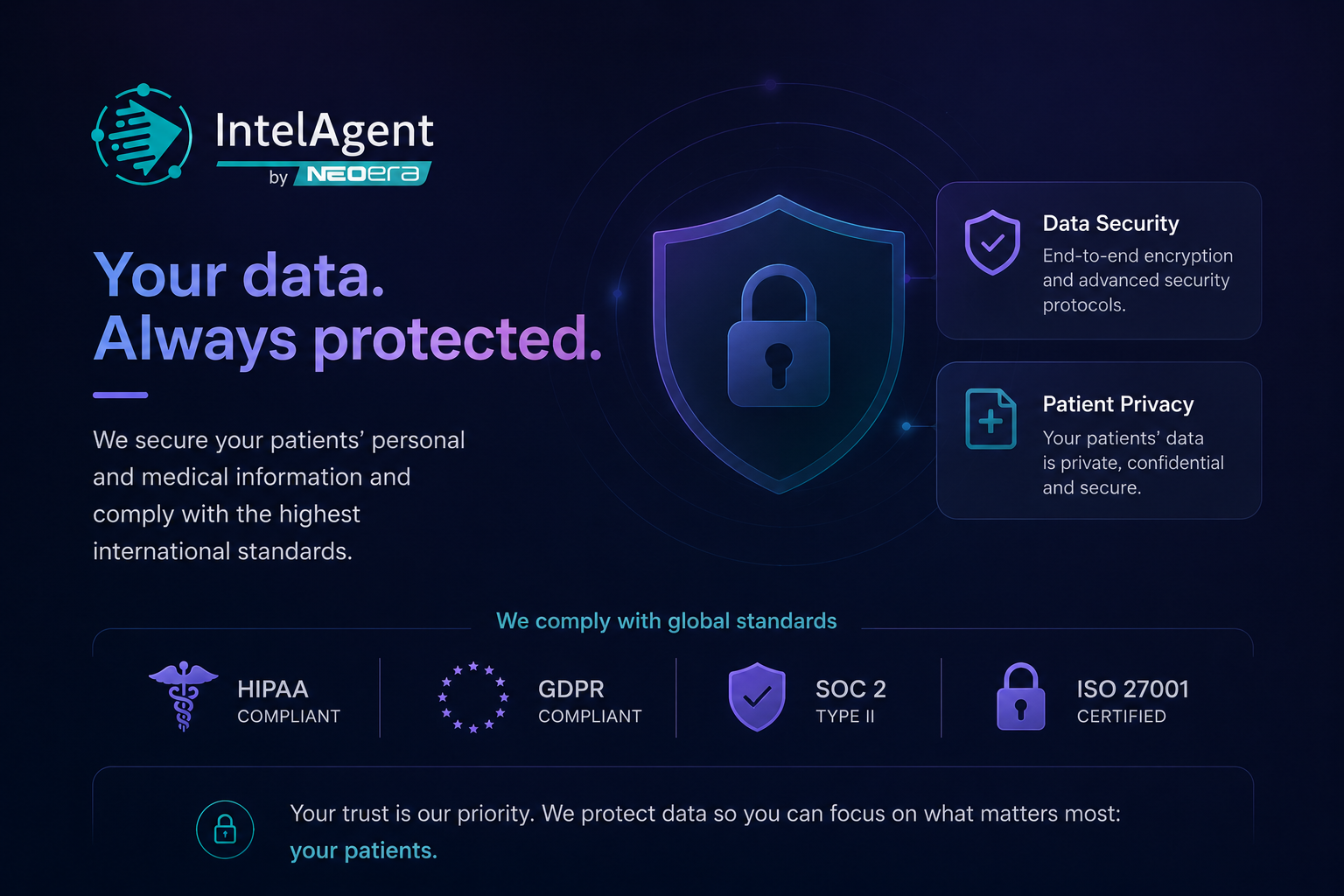
Patient trust begins with data security. As clinics adopt AI-powered communication tools, protecting personal and medical information has become just as important as improving patient experience. IntelAgent is built with security, privacy, and regulatory compliance in mind, helping aesthetic clinics automate patient interactions while maintaining strict standards for data protection, confidentiality, and responsible information management.