

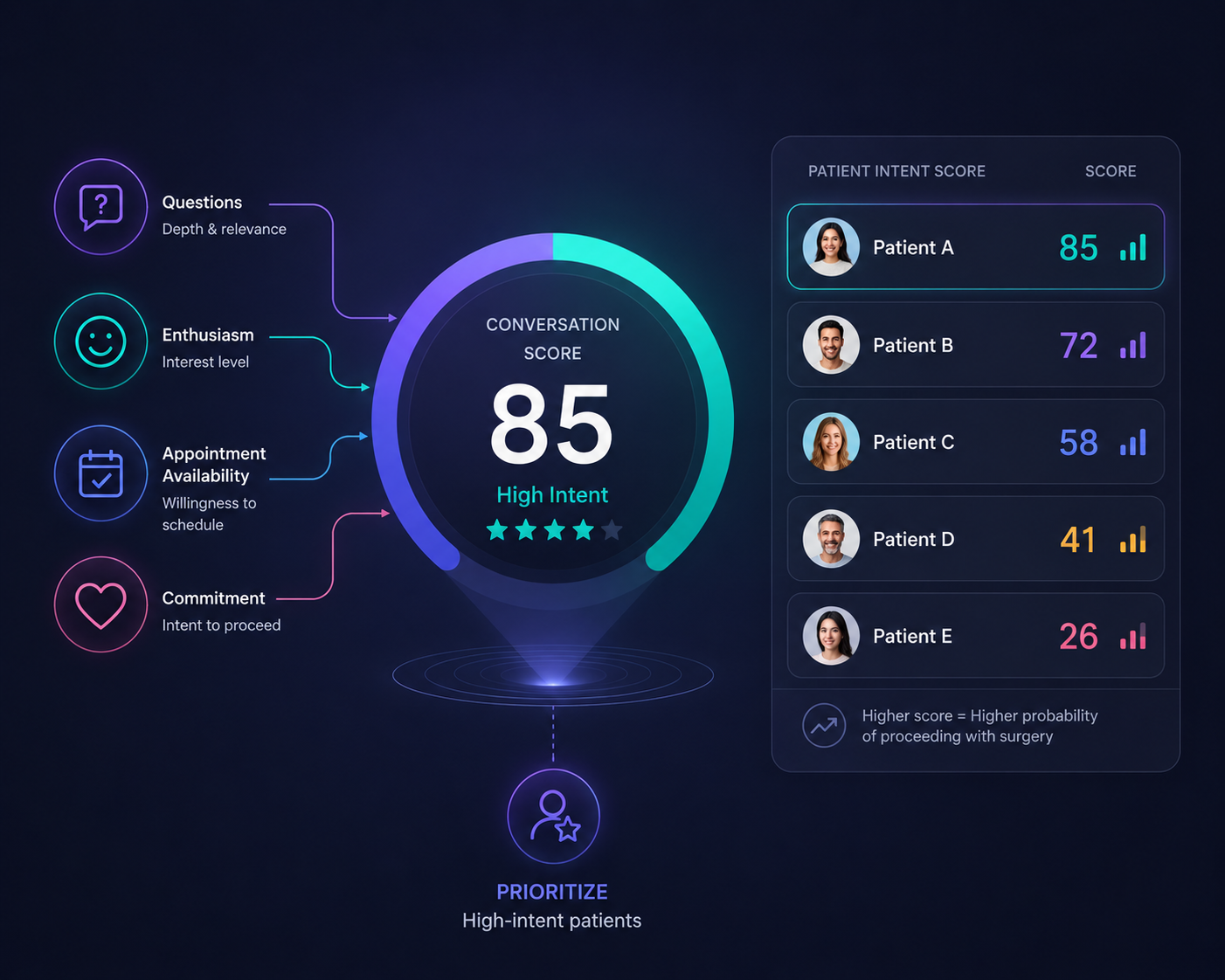
Not all patients who contact a practice are at the same stage in their decision-making process. Some are just exploring the idea; others have already researched prices, read about the procedure, and are ready to schedule an appointment. The problem is that, without a system to distinguish between the two, the surgeon devotes the same time and attention to someone who is just browsing as to someone who has already decided to undergo surgery. That is exactly the gap that lead scoring addresses—a practice already validated by solid data in sales and marketing, and one that is now being applied to the conversation between a patient and an intelligent agent. The evidence behind this practice is compelling. Studies on predictive scoring show that high-scoring leads (80 or higher on a scale of 100) convert in about 35% of cases, while low-scoring leads (less than 40) convert in just 8%. In other words, the difference between serving the right patient first versus the wrong one can be more than fourfold in terms of conversion probability. Overall, organizations that implement a scoring system report a 20% increase in their sales team’s productivity, simply because they stop investing equal time in all contacts. Response time also affects the score. Various studies on lead management have found that contacting a prospect within the first hour makes them up to seven times more likely to qualify as a real opportunity, while 70% of prospects are lost due to delayed or non-existent follow-up. And when artificial intelligence is introduced into the qualification process, the results improve even further: machine learning-based scoring reports up to a 75% higher conversion rate compared to traditional methods, and only 27% of unqualified leads are actually ready to move forward. In the case of a patient discussing plastic surgery with an agent, the signals of interest are just as measurable as in any sales process: how many questions they ask about a specific procedure, whether they ask about prices or available dates, whether they want to know about the surgeon’s experience, how long the conversation lasts, and whether they try to schedule an appointment right then and there. Each of these signals can be translated into a score, just as in any data-driven sales process. IntelAgent applies this same logic directly to every conversation with a potential patient. The agent identifies the patient’s actual level of interest based on what they ask, how deeply they probe, and how close they are to wanting to schedule an appointment, and provides the surgeon with a clear priority score. This means that, instead of reviewing all conversations equally, the surgeon can focus their attention first on the patients most likely to undergo surgery, without wasting time on contacts who are still just exploring the idea.
The patient who asks the most questions is almost always the one who is closest to making a decision: how the patient interest score works
According to industry data, the patients who ask the most questions about procedures, prices, and dates are the ones most likely to actually schedule surgery: high-scoring leads convert up to four times more often than low-scoring ones, and AI-powered scoring improves conversion rates by up to 75%. IntelAgent automatically translates each patient’s questions, interest, and behavior into a priority score, so the surgeon knows exactly who to see first.
Keep reading

June 27, 2026 · NEOERA Team
The Hidden Cost of Not Responding in a Timely Manner: What the Data Says About 24/7 Care in Plastic Surgery
Every call or message that isn’t answered in a timely manner costs a plastic surgery practice real money: up to $2,000+ in expected value per missed call, and conversion rates that drop by up to 80% if the call isn’t answered within 15 minutes. Patients do their research at night, wait just 90 seconds before hanging up, and nearly a third never call back. Intel Agent solves this by answering and scheduling appointments 24/7, capturing that critical window of minutes when most conversions are decided.
June 26, 2026 · NEOERA Team
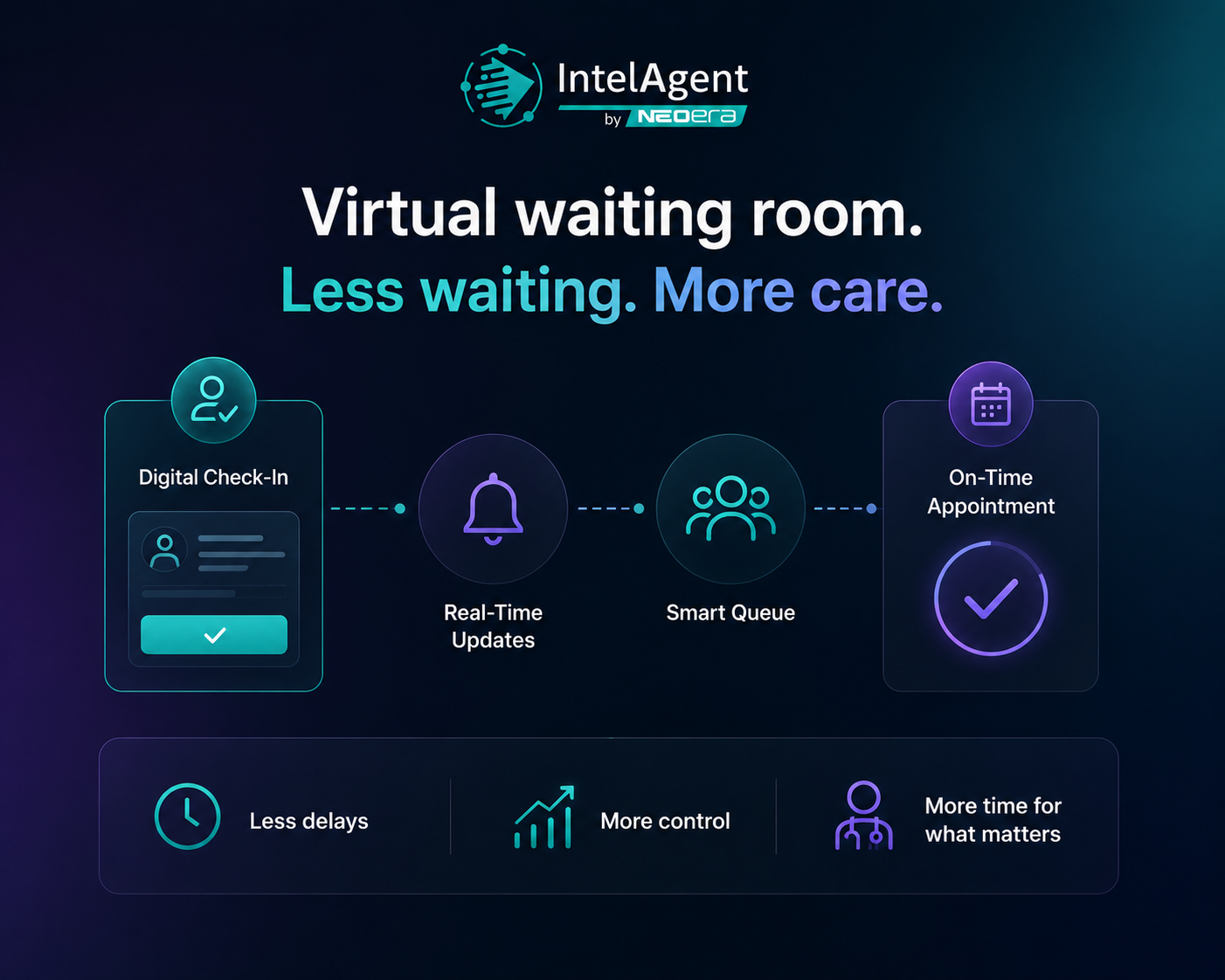
The waiting room should no longer be a physical space: what the data says about digital check-in and the perception of wait times
Patient satisfaction depends more on the perceived wait time than on the actual wait time, and a lack of information about how long the wait will be measurably reduces satisfaction. Digital check-in in healthcare has shown reductions of up to 40% in wait times, improvements in satisfaction from 3.4 to 4.7 out of 5, and up to 50% fewer registration errors. Eighty percent of patients would switch providers solely for convenience, regardless of the quality of care. IntelAgent extends this digital check-in approach to the entire patient journey—from appointment confirmation to arrival at the office—reducing friction and building trust from the very first point of contact.