

In the United States, about 25 million people—nearly 8.5% of the population—have limited English proficiency. For a plastic surgery practice, that figure isn’t just an abstract demographic statistic: it represents an entire segment of potential patients who, right now, may be leaving the surgeon’s website simply because they can’t find a way to communicate in their own language. And this phenomenon is not unique to the United States: in any country that receives foreign patients, medical tourists, or migrant communities, the same problem occurs on a smaller or larger scale. Studies on patient safety are conclusive. In an analysis of six U.S. hospitals, patients with limited English proficiency suffered some form of harm in 49.1% of recorded adverse events, compared to 29.5% of patients who spoke English fluently. Of those incidents, nearly half resulted in moderate or severe harm, or even death, compared to just 24% among native speakers. More than 52% of adverse events in patients with a language barrier were caused by communication errors, compared to 35.9% in those without such a barrier. This is no coincidence: the most frequent cause of serious events reported to the Joint Commission, year after year, continues to be communication breakdowns between the medical team and the patient. The problem isn't limited to the operating room. A KFF survey found that 35% of Hispanic adults who responded in Spanish said it is difficult to find a doctor who explains things to them in a way they can understand, compared with just 17% of those who communicate in English. And according to U.S. public health data, half of adults with limited language proficiency delayed seeking medical care, while 40% simply gave up on seeking it altogether. That means that, before even making it to a doctor’s appointment, a significant portion of potential patients have already fallen by the wayside simply because they couldn’t communicate in their own language. In cosmetic surgery and medical tourism—where many patients already cross borders to undergo procedures—the language barrier consistently ranks among the top risks identified by specialists: it makes it difficult to understand preoperative and postoperative instructions, complicates the informed consent process, and leaves patients without a clear understanding of what they are agreeing to sign. Some clinics address this with in-person translators or telephone interpretation services, but both solutions depend on staff availability, involve recurring costs, and are rarely available 24 hours a day. This is where Intel Agent makes a tangible and scalable difference: it communicates with each patient in the language they speak—without the need for bilingual staff to be available at all times or to hire external interpretation services—and automatically transcribes each conversation into the language the surgeon prefers to review. The result is twofold: no patient is left behind because they don’t speak the language used in the office, and no surgeon loses track of or misses the details of what was actually said, regardless of the language in which the original conversation took place.
When Language Determines Whether a Patient Trusts Their Surgeon: What the Data Says About Multilingual Care
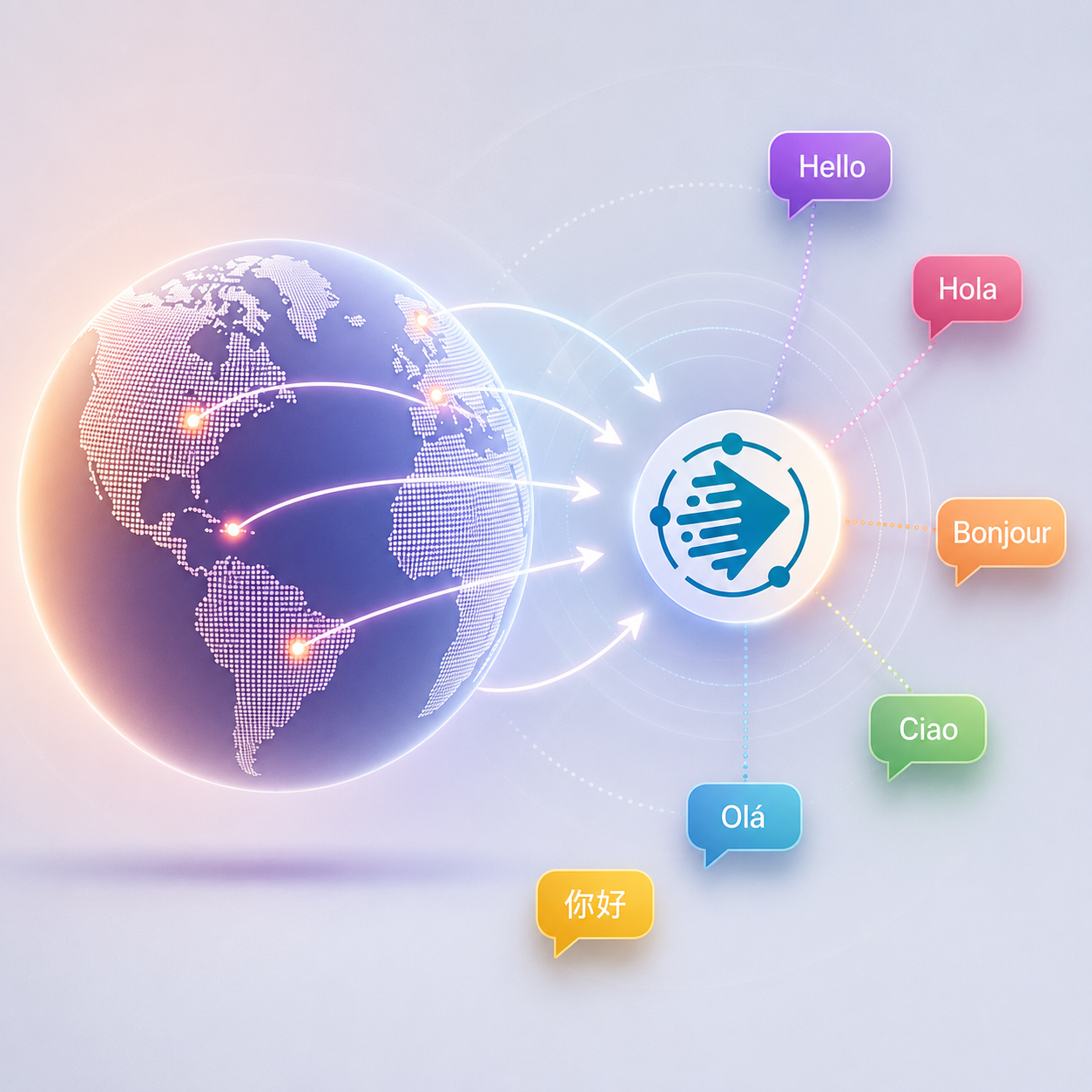
Nearly 25 million people in the U.S. have limited English proficiency, and data show that they experience more medical errors due to communication breakdowns, delay or forgo seeking care, and are more distrustful of unclear explanations. Nearly half of adverse events involving these patients result in moderate or severe harm. In cosmetic surgery and medical tourism, the language barrier is one of the risks most frequently cited by specialists, affecting everything from informed consent to postoperative follow-up. Intel Agent converses with each patient in their own language and transcribes the conversation into the language the surgeon needs, eliminating that barrier without relying on bilingual staff or external interpretation services.
Keep reading

June 27, 2026 · NEOERA Team
The Hidden Cost of Not Responding in a Timely Manner: What the Data Says About 24/7 Care in Plastic Surgery
Every call or message that isn’t answered in a timely manner costs a plastic surgery practice real money: up to $2,000+ in expected value per missed call, and conversion rates that drop by up to 80% if the call isn’t answered within 15 minutes. Patients do their research at night, wait just 90 seconds before hanging up, and nearly a third never call back. Intel Agent solves this by answering and scheduling appointments 24/7, capturing that critical window of minutes when most conversions are decided.
June 26, 2026 · NEOERA Team
The waiting room should no longer be a physical space: what the data says about digital check-in and the perception of wait times
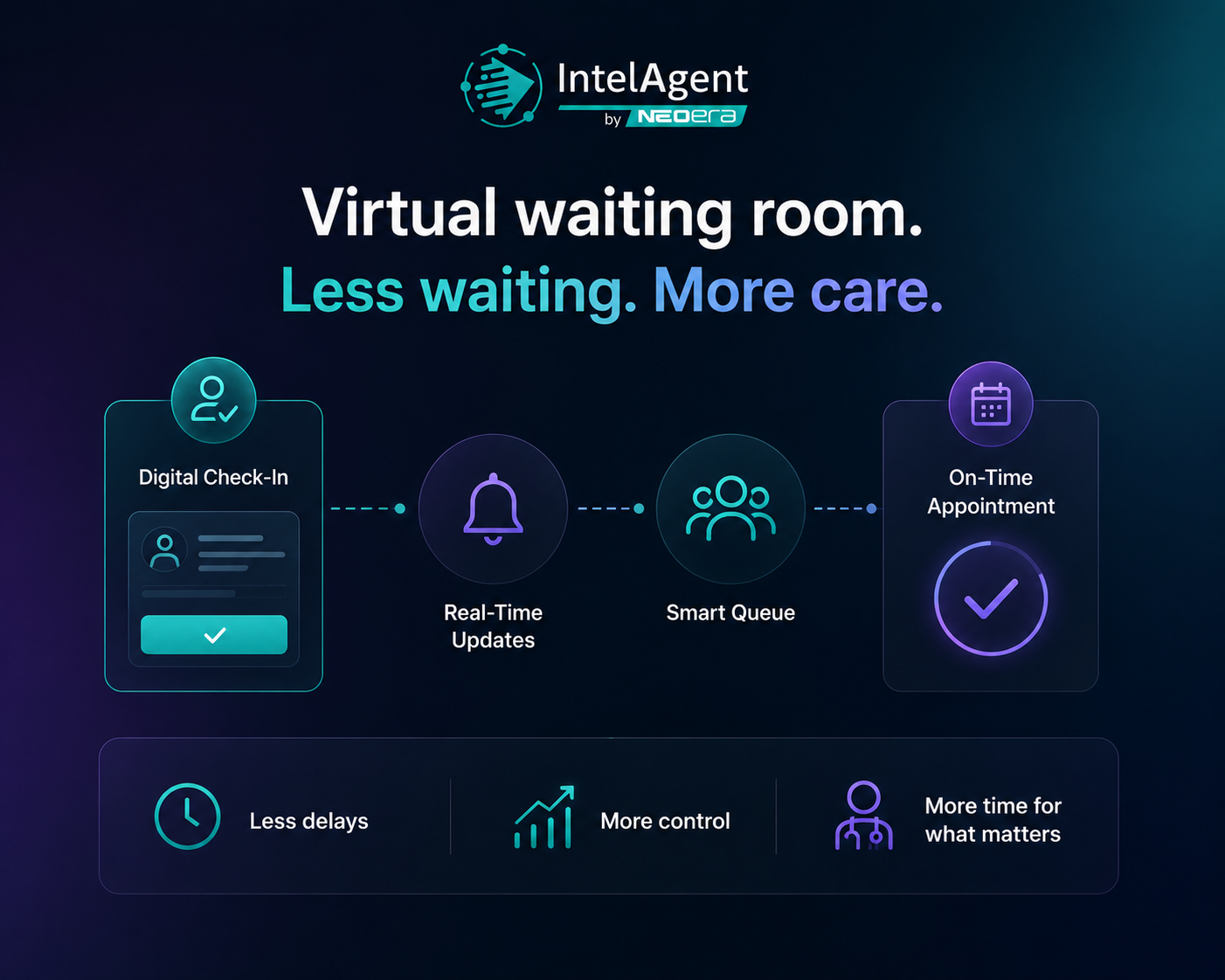
Patient satisfaction depends more on the perceived wait time than on the actual wait time, and a lack of information about how long the wait will be measurably reduces satisfaction. Digital check-in in healthcare has shown reductions of up to 40% in wait times, improvements in satisfaction from 3.4 to 4.7 out of 5, and up to 50% fewer registration errors. Eighty percent of patients would switch providers solely for convenience, regardless of the quality of care. IntelAgent extends this digital check-in approach to the entire patient journey—from appointment confirmation to arrival at the office—reducing friction and building trust from the very first point of contact.